
Sleep is critical for both your physical and mental health. Did you know that if you aren’t getting enough quality sleep, you’re likely to experience higher levels of pain and delayed healing? Because of this, sleep health was added to the physical therapist practice act in 2015. Physical therapists can help with positioning, pain that affects sleep, education about sleep hygiene, and even screen for more serious sleep disorders.
Addressing your sleep hygiene is the best place to start if you aren’t getting the quantity or quality of sleep you need. It’s also the first line of treatment for people with insomnia. So, what is sleep hygiene? It’s simply putting daily habits into place (or removing bad habits) that improve how you sleep.
Keep a consistent sleep schedule
Consistency is key when it comes to sleep. Try to go to bed and wake up at the same time every day regardless of whether it’s a work day or the weekend. Do you have to set an alarm to wake up in the morning? If so, you may not be going to bed early enough.
To figure out how many hours of sleep you need, go to bed at your usual time on the weekend and don’t set an alarm in the morning. Calculate how many hours you slept. That number is probably pretty close to your ideal number of hours of sleep. For most adults the average is 7-9 hours/night.
If you need to wake up at a certain time for work or school, take your ideal number of hours of sleep and count backward to calculate when you should begin to sleep. Now, set a SLEEP alarm 30 minutes before that time to assure you are in bed so you can fall asleep at that time every night. Eventually, try to wake up without an alarm.

As a very general rule, try to limit naps to no more than 20-30 minutes and not past 3 PM. With that said, there is an ancient sleep pattern that people either instinctively or intentionally adopt that includes taking a long afternoon nap with a period of wakefulness in the night, called segmented or polyphasic sleeping. In our modern world, it could work for people who don’t have a rigid schedule and who can be consistent with it.
Exercise (yes – physical therapists recommend this for literally everything!)

Moderate aerobic exercise for at least 30 minutes a day will improve your sleep. You can exercise all the way up until bedtime, as long as it isn’t vigorous one hour before bed.
Don’t smoke

Deep sleep occurs more in the first part of the night and is the time when repair processes for the body and brain occur. Nicotine is a stimulant and interrupts your deep sleep.
Not only that, smoking also causes early waking due to nicotine withdrawal. During REM sleep we process our emotions, and we get most of our REM sleep in the early morning hours. Because of this, smokers have a double whammy of missing out on the body and brain regenerating deep sleep, as well as the mental health boosting REM sleep.
Avoid caffeine in the afternoon

Without going into a whole chemistry lesson – caffeine’s chemical structure is the same as one part of adenosine’s, the ‘sleep pressure’ neurotransmitter. The way caffeine wakes us up, is by binding to the adenosine receptors. It’s pretty cool because caffeine works to make us feel more awake within 15 minutes of consuming it. But, keep in mind, caffeine has a 4.9 hour half-life, which is how long you can experience it’s wakeful effects. Because of this, avoid caffeine within 5 hours of bedtime. Don’t forget, other foods like chocolate, teas and sodas may contain caffeine. Your favorite brand of ice cream may even add caffeine, check the labels!
Avoid alcohol to improve sleep
The most popular sleep aid in the world is the “nightcap”. Alcohol makes you sleepy by increasing adenosine, the neurotransmitter that pressures the need to sleep. The problem is that alcohol increases your deep sleep and decreases REM sleep at least initially. As the night goes on and blood alcohol levels decrease, you cycle back into light sleep. This results in fragmented sleep where you miss one or more sleep cycles.
How much alcohol does it take to affect your sleep? Check out this infographic sourced from SleepFoundation.org:

There’s another reason to avoid alcohol for a better nights sleep. Since alcohol has a sedating effect, it leads to greater than normal relaxation in your head and neck which increases the risk of snoring and sleep apnea.
If you occasionally want to enjoy a drink without disrupting your sleep, have a low to moderate amount at least 3-4 hours before bedtime.

Eat wisely for sleep hygiene
Eat 2-3 hours before bedtime and refrain from drinking fluids close to bedtime. Eating a dinner higher in carbohydrates will help make you sleepy. Because of this, you’ll want to avoid too many carbs at lunch so that you don’t get sleepy and end up taking a nap. In adults, pre-bedtime meals or snacks stimulate the digestive system which disrupts the circadian rhythm and increases body fat.
Eat foods high in magnesium, tryptophan and melatonin to improve sleep. See the table below for some examples.
| Magnesium | Tryptophan | Melatonin |
| Yogurt | Poultry (turkey / chicken) | Tart cherries |
| Nuts & seeds | Dairy (cheese / eggs) | Grapes |
| Quinoa | Beans, lentils & peas | Nuts – walnuts & pistachios |
| Avocados | Fish / shellfish | Seeds – mustard seeds |
| Pumpkin Seeds | Whole grains | Tomatoes / peppers |
| Bananas | Nuts / seeds | Strawberries |
| Fish | Fruit / vegetables | Eggs |
| Tofu | Fish |
Check your medications
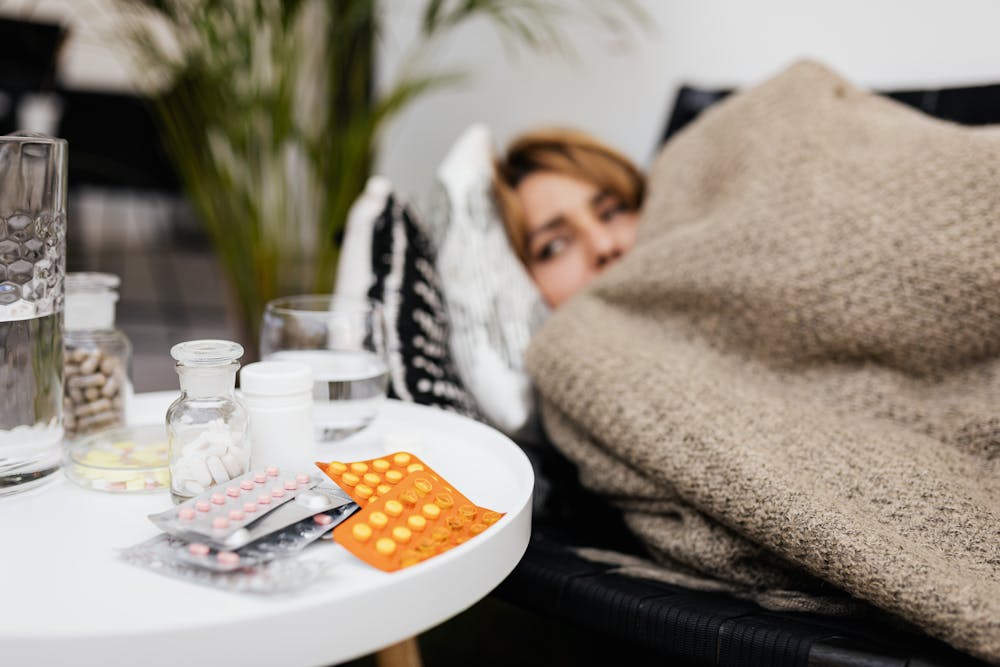
Avoid medications that delay or disrupt sleep. Take heart, blood pressure and asthma medications in the morning. If sleep is an issue for you, please talk to your doctor to assure your medications (and when you take them) aren’t contributing to your sleep problems.
Sunlight exposure in the morning and afternoon

Humans are animals, and as much as we’ve tried to tame ourselves into modern life, we still biologically need certain things. One of those things is sunlight in the morning and afternoon. It helps to set your circadian rhythm when you begin your day in sunlight. Morning sunlight not only stimulates serotonin production which improves your mood, but it also helps improve sleep duration at night.
Limit blue light exposure before bed
Blue light is normal during the sunny part of the day. But we experience it artificially in the evening and after dark by viewing any type of screen or if we have LED lights on in the home. Try to limit blue light exposure 1-2 hours before bedtime. Two hour exposure to blue light in the evening suppresses melatonin, which is the hormone that helps you sleep.
Wear blue light blocking glasses 1-2 hours before bed if screens and LED lights can’t be avoided. This site sells blue light blocking glasses of all different shapes, sizes and uses.

Swanwick Blue Light Blocking Glasses – Click to Shop
You can also purchase blue light blocking light bulbs in amber or red to put in the lamp at your bedside or in night lights if you need them.

Better Nights Anti-Blue Light LED Bulb by Swanwick – Click to Shop
Relax before bed
When putting yourself to bed, treat yourself the way you would soothe a child at bedtime. Take a warm shower or bath before bed. After bathing, your body temperature drops which mimics what happens when you fall asleep.

Do gentle yoga, self-massage or stretching before bed to unwind before sleep.
Listen to meditations like Yoga Nidra for sleep. This is an ancient practice that uses a guided progressive relaxation technique that allows you to enter the deepest non-REM delta wave sleep while maintaining consciousness. The western twist on Yoga Nidra, is called Integrative Restoration (iRest) and has studies to back it up.
Additionally, mindfulness meditation, mantras and breathing techniques for relaxation are all good choices to improve sleep quality.
Make the bedroom a hibernation cave

Your bedroom should be like a hibernation cave: dark, cool and quiet.
To achieve darkness, use blackout curtains, eye masks and spend time in dim lights 1 hour before bed. Try not to have any gadgets that cast light all night long in your bedroom. If you need a night light for safety, put them in places where they won’t directly illuminate the bedroom (such as the bathroom or hallway). Use a red bulb (see link above) in the night light to avoid any blue light at night.


100% Silk Sleep Mask Black – Click to Shop
A drop in body temperature stimulates sleep. The most efficient sleeping temperature is 60-67 degrees Fahrenheit. If you are sleeping too hot, your body has to thermoregulate which results in sleep fragmentation. To maintain a cool bedroom, use a mobile A/C unit to only cool the bedroom. Use ceiling fans, cooling sheets, cooling mattress covers and avoid hot clothing.
If you’re healing an injury, you really need deep sleep to promote regeneration and repair. Time spent in deep sleep increases when it’s quiet and awakenings increase in a noisy environment. Use earplugs and white noise machines if noises are waking you up at night.

Sound Blocking Earplugs – Click to Shop
References
If there are affiliate links on this page, we may earn a small commission on qualified purchases. We only endorse products that we trust or have used. We hope you find value in our recommendations and utilize the provided links to purchase.
Disclaimer