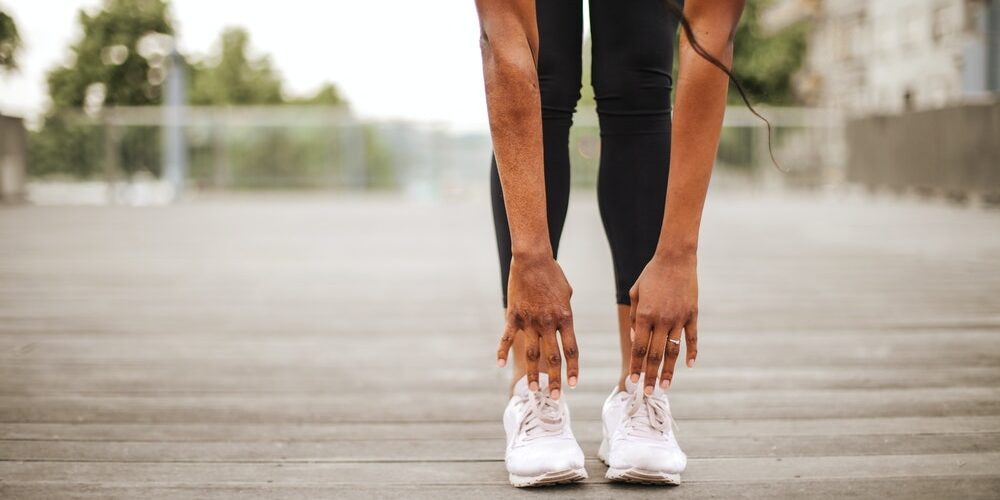
The ability to touch your toes when bending forward from a standing position with straight knees is one important way physical therapists measure flexibility. We care about this motion because many daily activities require this flexibility. A few everyday examples include picking things up off the ground, taking shoes on and off, loading or unloading washers, and more.
Even more concerning, if you don’t have adequate flexibility in a forward bend, you’re at risk of developing lower back pain, pain in your upper spine or pain in your lower extremities. Because flexibility is essential for functional pain-free movement, the toe touch flexibility screen is useful for anyone to try.
Try the toe touch flexibility test
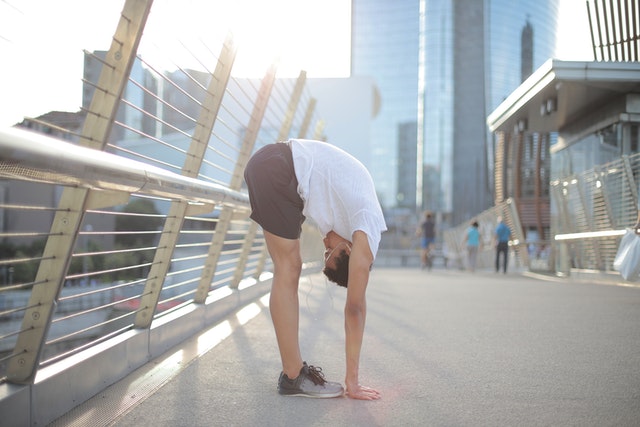
Remember the sit-and-reach test back in school? This test is similar except you’re standing. Go ahead and stand up, forward bend and try to touch your toes without bending your knees. If you can do this without pain or problems, congratulations! You probably don’t need to keep reading unless, like us, you geek-out on body stuff.
If you didn’t pass the toe touch flexibility test, please read on and begin to incorporate the tips we teach you here. And even more importantly, if you experienced any sort of pain with this test . . .
STOP IF YOU HAVE PAIN WITH FORWARD BENDING
Any pain, deep ache, numbness or tingling anywhere in your back, neck, one or both of your buttocks, or in one or both of your legs is a red flag. Do not spend time in this position, or attempt to gain flexibility without consulting with a physical therapist first.
Does everyone need to be able to touch their toes?
Yes and no, if you have very short arms and long legs, touching your toes while bending forward with straight knees might seem like an impossible feat. Yet, with some targeted stretches and soft tissue work, even body-geometry challenged people can get closer to touching their toes.
If you have hip joint disorders, hip precautions or a spine injury or condition, consult with your doctor or physical therapist before trying any of these stretches. If you’re recovering from hip surgery, please get clearance from your medical team before trying to touch your toes.
Luckily, for the vast majority of us, the reason we can’t touch our toes comes down to inflexibility of the hamstrings, hips, back muscles, and calves. Also, the connective tissue on the back of the body from the top of the head down to the bottoms of the feet (also known as the posterior fascia) can be restricted.
Let’s break down some things you can do to make changes to these areas.
Soft tissue work & Stretching
The name of the game when trying to increase flexibility is to focus on a combination of stretching and soft tissue work to the areas that are tight. When stretching, hold the stretch for a minimum of 30 seconds. When releasing tight muscles over balls and rollers, roll until the pain diminishes.
Soft Tissue Work
Soft tissue work helps both fascia and muscles get more blood flow and soften adhesions that are keeping things tethered. This can be done with a foam roller, massage balls, your hands, or by a massage therapist or physical therapist who practices manual therapy.
Foam rolling the hamstrings and calves is nobody’s favorite, but it’s great at targeting different layers of restrictions that have formed over the years.

Rumble roller 31 x 6 (Blue – firm) – Click to Purchase
The ball below is our top choice for releasing restrictions in the gluteal muscles.

Gymnic Heavymed 1 Medicine Ball – Click to Purchase
Stretches

The number one culprit when you can’t touch your toes are tight hamstrings. When the hamstrings are tight, they don’t allow your hips to fold into a forward bend, and they limit the knees from fully straightening in this position.
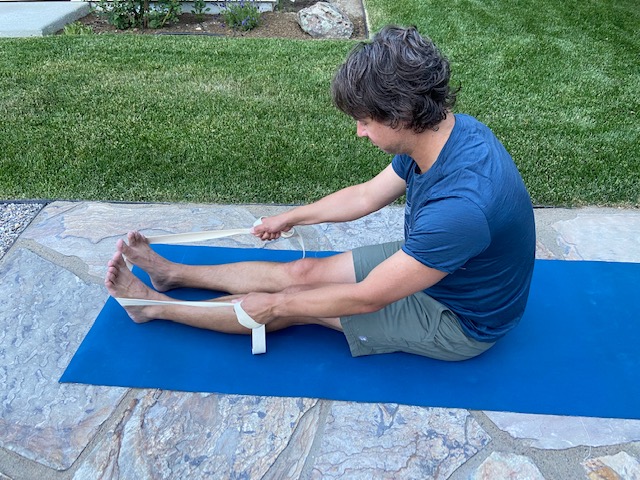
Hamstring and calf stretch
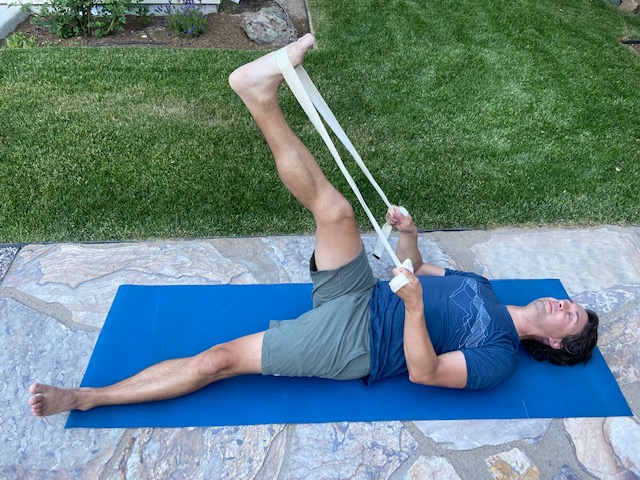
You can use a yoga strap, dog leash, belt, scarf or anything long and not too flexible. If you’re looking for a great stretching strap, we recommend this one:
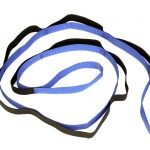
RangerMaster StretchStrap – Blue – CLICK TO PURCHASE
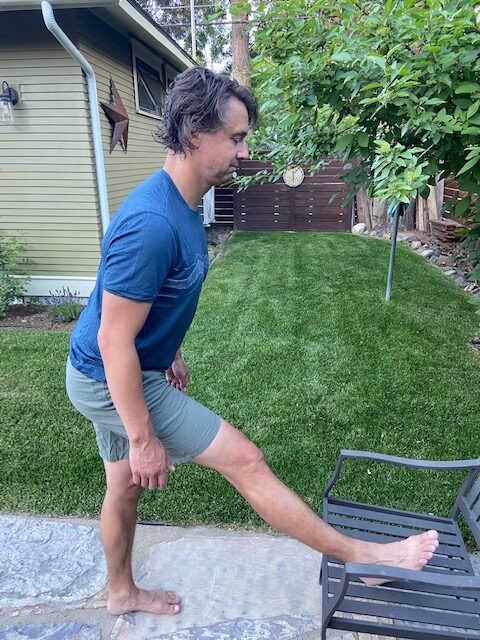
Standing hamstring stretch
Hip Stretches
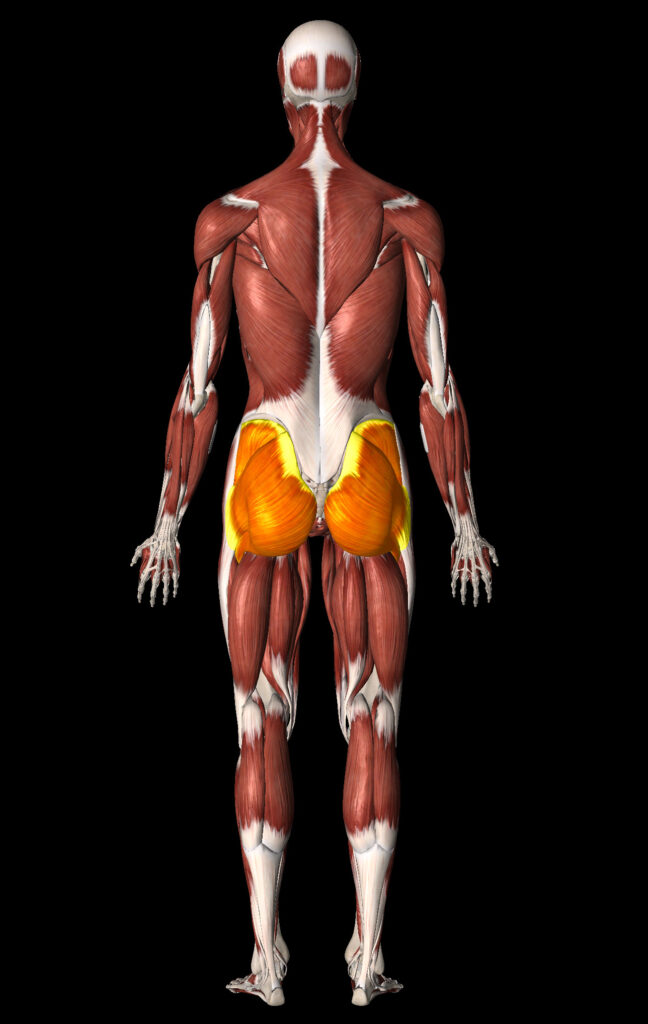
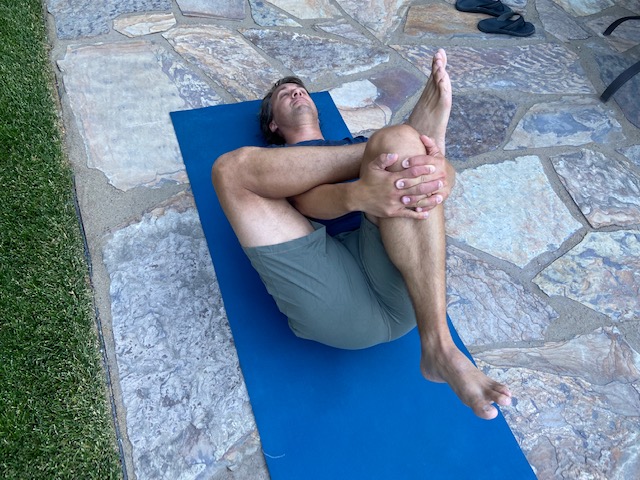
Sometimes the hips don’t roll back into the sockets very easily or the muscles in your buttocks are tight. Below are stretches you can do if your limitation is coming from the hips.
Single knee to chest stretch
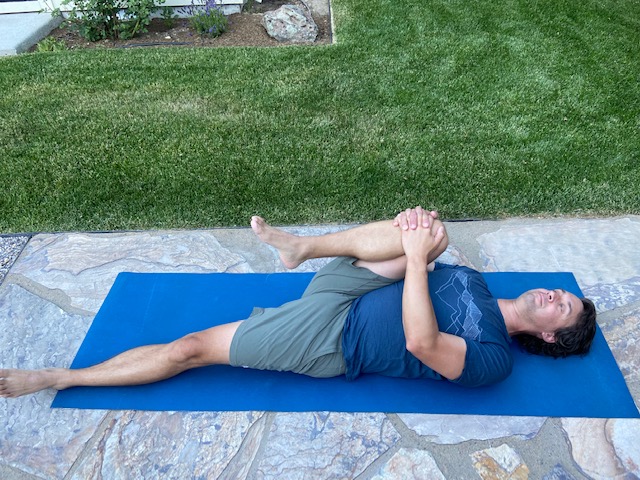
Piriformis stretch
Calf Stretches
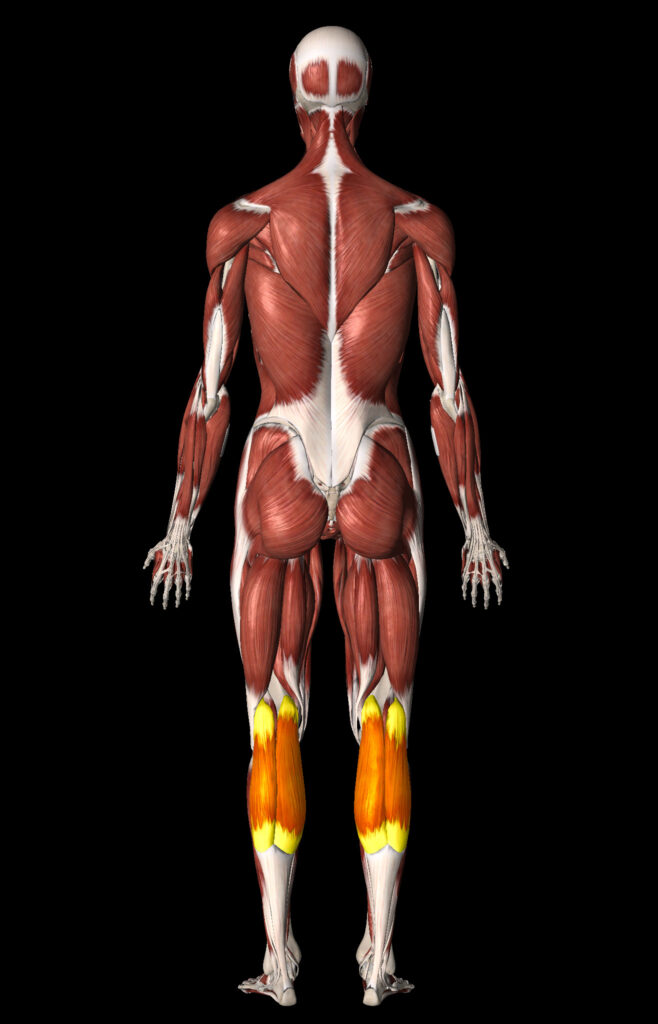
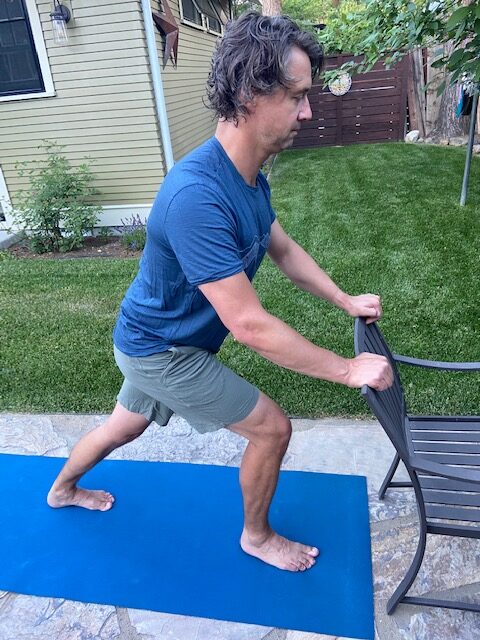
If you can’t keep your knees straight in a forward bend, in addition to hamstring tightness, your calves might be too tight.
Standing calf stretch
Lower back Stretches
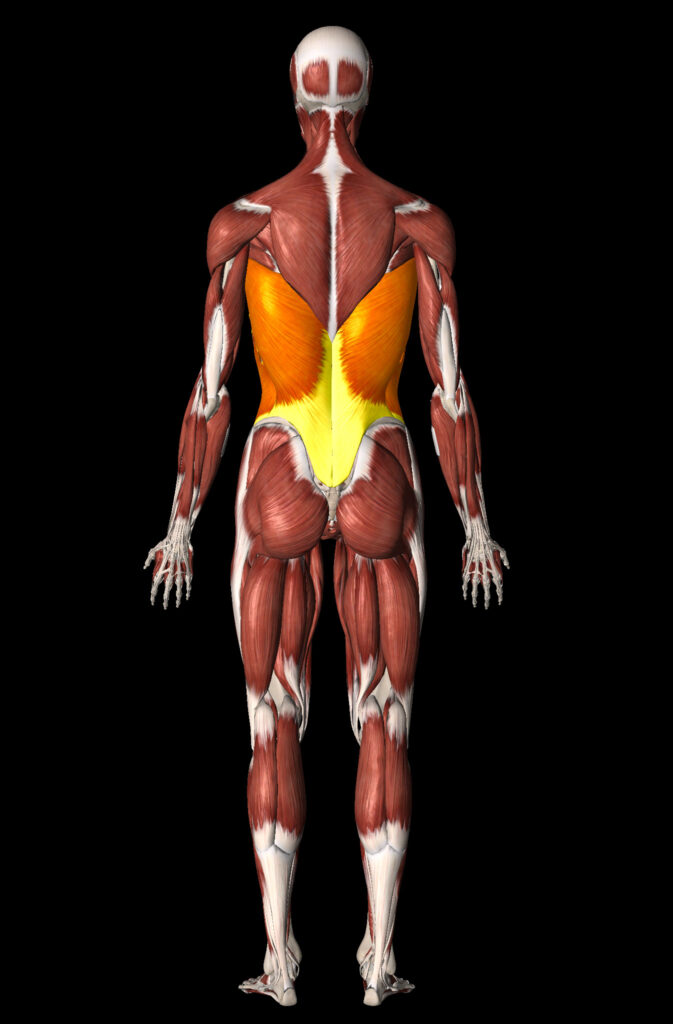
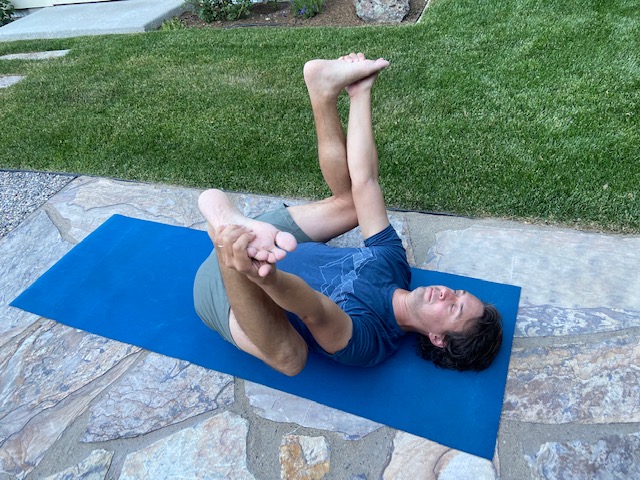
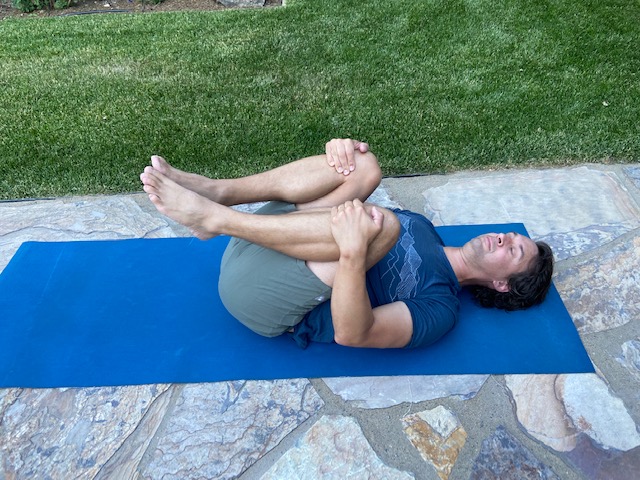
If the main stretch you feel when trying to touch your toes is in the lower back (without pain), then it’s time to focus on stretching your lower back.
Happy baby
Double knee to chest
Childs pose

Combination stretches
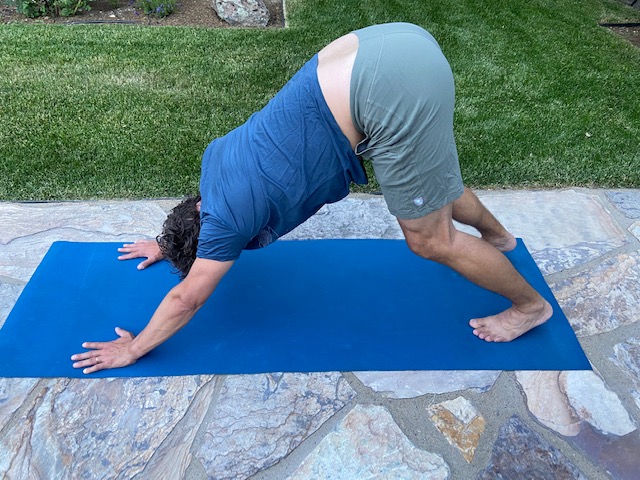
There are some stretches that can target all of the muscles and the posterior fascia at once. These stretches are best done after you’ve addressed any specifically tight muscle groups listed above.
Forward fold
Downward dog
We hope that after practicing all of these stretches, you will be well on your way to touching your toes!
You are the age of your spine. You are as flexible as your spine. That transfers to other areas of your life.
~ Diane Lane
If there are affiliate links on this page, we may earn a small commission on qualified purchases. We only endorse products that we trust or have used. We hope you find value in our recommendations and utilize the provided links to purchase.
Disclaimer